Skip to content
Asset Haus

Tokenization infrastructure for private markets

Asset Haus helps institutions own the tokenization platform or launch tokenized private-market deals with investor onboarding, registry, transfer controls, reporting, and launch support.

or email the team at platform@asset.haus
Illustrative interface with sample data. Transfers move only through the checks the issuer and counsel configure.
Deals structured
32
Facilitated
$200M+
Asset classes
7
Jurisdictions delivered
9+

Tokenize, borrow or invest

One infrastructure behind all three: the same registry, transfer controls and documents serve the asset, the loan and the investor.

  • Line drawing of a house, an office block and a warehouse joined by a path

    Asset owners and institutions

    Tokenize your assets

    Own a tokenization platform under your brand, or launch one tokenized private-market deal with onboarding, registry and transfer controls.

    • On-premise or white-label
    • Real estate, credit, funds, pre-IPO
    • Published pricing

    By asset: Real estate · Private credit · Private equity · Pre-IPO · Trade finance · Syndicators · Private companies

  • Line drawing of cargo containers and sacks of goods on a quay, with a ship and cranes behind

    Traders and asset holders

    Borrow against trade or assets

    Finance one shipment until your buyer pays, or borrow against tokenized funds, real-asset tokens, SAFEs, SAFTs and pre-IPO SPV units without selling.

    • Trade finance $100k–$5m per shipment, up to 90% advance
    • Loans $250k–$10m, up to 50% loan-to-value
    • First reply within one business day
  • Line drawing of document folders with a keyhole, linked by network lines

    Investors, family offices and funds

    Invest in private-market strategies

    Short-dated trade finance, loans secured by tokenized assets and late-stage companies before their IPO, with the documents in one Dataroom.

    • Trade finance 9–11% target net a year
    • Collateral lending 9–12% target net a year
    • Pre-IPO 2–3x target gross multiple

Financing terms are indicative; investment figures are targets, not guarantees, for professional investors only. Capital at risk.

Three deal types behind 32 structured deals

One completed engagement for each, with the figures from its case study.

View all cases
Line drawing of a slender residential tower with curved balconies on a waterfront with palm trees

Cross-border structured assets

Real-estate and structured-asset tokenization

Multi-jurisdictional deals with mixed investor bases: SPV stack, compliance gates, registry and settlement delivered together.

Case study

Dubai Luxury Residential Tokenization

Deal size
$22M
Vehicle
Bahrain SPV
Investors
45-50
Instrument
SPV Equity
Read the case
Line drawing of small shopfronts and a workshop, with a stack of invoices tied with string

Private credit and lending

Private credit and structured lending

Note issuance, tranche design, transfer rules and servicing workflows, with compliance and settlement that match the credit terms.

Case study

SME Credit Line Tokenization

Vehicle
BVI SPV
Instrument
Debt Notes (Receivables-Backed)
Read the case
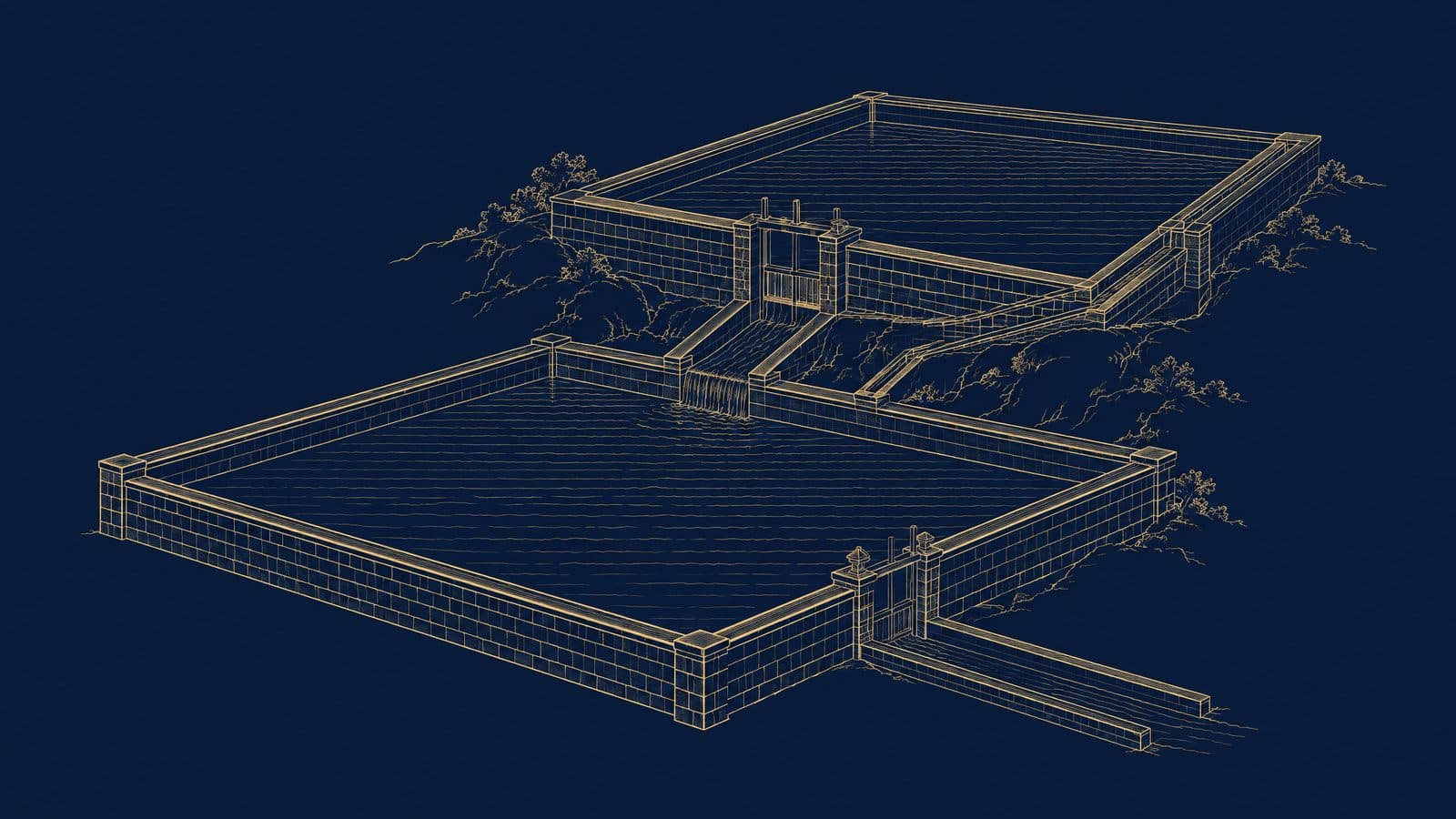
Line drawing of a two-tier reservoir with an upper and a lower basin joined by sluice gates

Platform operators

Platform deployments for operators

Deployments for banks, brokers and platforms: source code, an architecture prepared for licence review, and long-term governance.

Case study

Lendscape — Lending Against Tokenized Assets

Vehicle
Multi-jurisdiction
Instrument
Lending Platform (Junior-Senior Pools)
Read the case

Tokenization platform and structuring, delivered as one operating layer

Deal operations, investor compliance, and registry, settlement and reporting run as one tokenization system of record, on-premise or as white-label SaaS, instead of five vendors with handoffs between them.

Deal operations

  • Deal structure builder
  • SPV and entity formation
  • Primary distribution workflows
  • Document signing and data room

Investors and compliance

  • KYC / AML orchestration
  • Accreditation and eligibility rules
  • Investor portal and onboarding
  • Jurisdictional access controls

Registry, settlement and reporting

  • Cap table as system of record
  • Transfer rules and corporate actions
  • Settlement and reconciliation
  • Audit-ready reporting packages

On-premise tokenization infrastructure your team runs

Operators choose on-premise for control over the stack, audit trails that regulators and partner banks can inspect, and an architecture prepared for licence review.

See the on-premise page
Source code delivery
You receive the full codebase, not a black-box tenant, and can audit and extend it with your own engineers.
Control over the stack
It runs inside your infrastructure perimeter, with no vendor-side access to customer data and no shared tenancy.
An audit trail across the workflow
Deterministic logs for onboarding, approvals, transfers and settlement, with exports for regulator and auditor review.
Licensing readiness
Deployed to match your licence conditions: operational control, change management, RBAC and segregation of duties.
Long-term governance
Your team sets operating policy, release cadence and integrations. Asset Haus maintains the core on contract.
Your infrastructure perimeter

Under your operational control

  • Source code in your repository, under internal-use licence
  • Infrastructure, deployment, and environments
  • Customer data, audit logs, system of record
  • Compliance rules, policies, and RBAC
  • Release and change management
  • Operational runbooks and SLAs

Asset Haus maintains on contract

  • Core codebase updates and security patches
  • Compliance and regulatory change tracking
  • Integration adapters (custody, KYC, payments)
  • Feature roadmap across deployments
  • On-call escalation for core platform issues
  • Legal partner coordination and delivery

Legal setup and licensing, coordinated as one build

Beyond entities and offering documents, Asset Haus coordinates the structure, licensing questions (VARA, ADGM, DIFC, AIFC, MiCA, FINMA, DASP, VASP), documents and compliance architecture with qualified counsel as one operating build.

Jurisdictions we structure in

  • Delaware
  • Cayman
  • BVI
  • ADGM
  • DIFC
  • AIFC
  • Luxembourg
  • Singapore
  • Liechtenstein
  • Switzerland
  • El Salvador
  • Wyoming

Delivered with licensed counsel across the US, EU, GCC and APAC, coordinated through a single operating build.

  1. Structure design

    Entity stack, jurisdictional fit, investor eligibility, and offering mechanics mapped to the operating model.

  2. Licensing workstream

    VARA, ADGM, DIFC, AIFC, MiCA, FINMA, DASP or VASP questions, scoped with qualified counsel and tracked where they apply.

  3. Document workflow

    Offering documents, subscription, transfer and onboarding templates wired into compliance and the registry.

  4. Compliance architecture

    KYC/AML rules, accreditation gates, transfer restrictions and reporting set before the first subscription.

See the legal setup page

Liquidity strategy starts before the listing

Secondary liquidity depends less on a listing event than on transfer design, settlement logic, counterparty access and controlled secondary workflows, built into the operating layer before the first subscription.

See the liquidity page

How one controlled transfer moves

Transfer request

A holder asks to move units to a named buyer.

Controls

  • Buyer eligibility
  • Holding period / lock-up
  • Jurisdiction rules
  • Issuer consent

If any check fails, the transfer stops and the register does not change.

Settlement

Settlement logic runs as configured for the instrument.

Register updated

The ownership record changes only after every check passes.

Simplified view. Rules are set with the issuer and counsel before the first subscription; venue integration is added only where legally and operationally appropriate.
  1. 01

    Primary design

    Transfer permissions, investor access, and settlement logic set before the first subscription.

  2. 02

    Anchors and counterparties

    Anchor investor routing, OTC flows, and internal matching between eligible holders.

  3. 03

    Distribution and venues

    Partner distribution, counterparty routing, and regulated venue integration where relevant.

  4. 04

    Secondary operations

    Corporate actions, transfer agent flows, and reporting for ongoing secondary activity.

What happens after the first deal

The first deal installs the operating base. Later offerings reuse its structure, documents and workflows instead of starting again with new vendors.

  1. Deal 1

    Setup

    The operating base is installed: platform, legal, compliance, registry and settlement, coordinated in one engagement instead of five vendor contracts.

  2. Deal 2

    Reuse

    The second offering runs on the same operating base. Structure, documents and workflows are reused rather than rebuilt.

  3. Deal 5

    Standard

    Deal operations, investor compliance, and registry and settlement become a repeatable internal capability.

  4. On-premise

    Permanence

    The operating layer becomes infrastructure your team owns and governs, instead of a dependency on a vendor.

Common questions about tokenization infrastructure

The full list covers deployment, legal setup, investors, the platform and pricing.

All questions
What deployment models do you offer?

Two: on-premise (the primary motion: source code running inside your infrastructure for licensed operators) and white-label SaaS or private listing workflows managed by Asset Haus for issuers and asset managers. Both run the same operating layer, with scope set after readiness review.

Do I need to understand blockchain?

No. The blockchain is infrastructure: you operate through a standard web application. Your investors don't need to understand it either. The ledger is used where it provides auditability and deterministic settlement, not as a user-facing layer.

Will our legal counsel approve this?

That decision belongs to your counsel. Asset Haus prepares the structure documentation, role map, and transfer-control logic for your counsel's review, and coordinates legal setup with qualified counsel and service providers. If you prefer one coordinated delivery, formation, opinions, and filings can run through partner firms, each responsible for its own advice. Asset Haus does not give legal advice or guarantee a counsel, licensing, or regulatory outcome.

Which jurisdictions are supported?

9+ jurisdictions delivered across US (Delaware, Wyoming), offshore (Cayman, BVI), GCC (ADGM, DIFC), EU (Luxembourg, Liechtenstein), and APAC (Singapore). Jurisdictional choice is made against operating model and investor base, not partner relationships.

Do you take a percentage of the raise?

No. Core pricing is scoped as fixed workstreams, not a default percentage of the raise. Indicative ranges: on-premise platform deployment $40k-$60k (one-time deployment), structuring $5k-$15k (per structure), and licence-readiness and application coordination $30k-$50k (by request). Third-party costs are scoped separately: government and regulator fees, paid-up capital, local counsel, audits, custody, and regulated service providers.

How long does deployment take?

Full launches are planned on a 120-day launch model, which is a planning model, not a guarantee. Exact scope and timeline depend on integrations, legal review, partner onboarding, and client readiness. Both deployment models use milestone-based delivery with 25% payments at each stage.


Tell us what you are building

Pick the closest path and send a short brief. The team replies by email within one business day.