
Trade finance: short-dated income from real shipments.
- Target net return
- 9–11% a year
- Average asset term
- 60–120 days
- Distributions
- Quarterly
- Minimum
- $100,000
Targets, not guarantees. Capital at risk. Figures are indicative until the fund documents are issued.
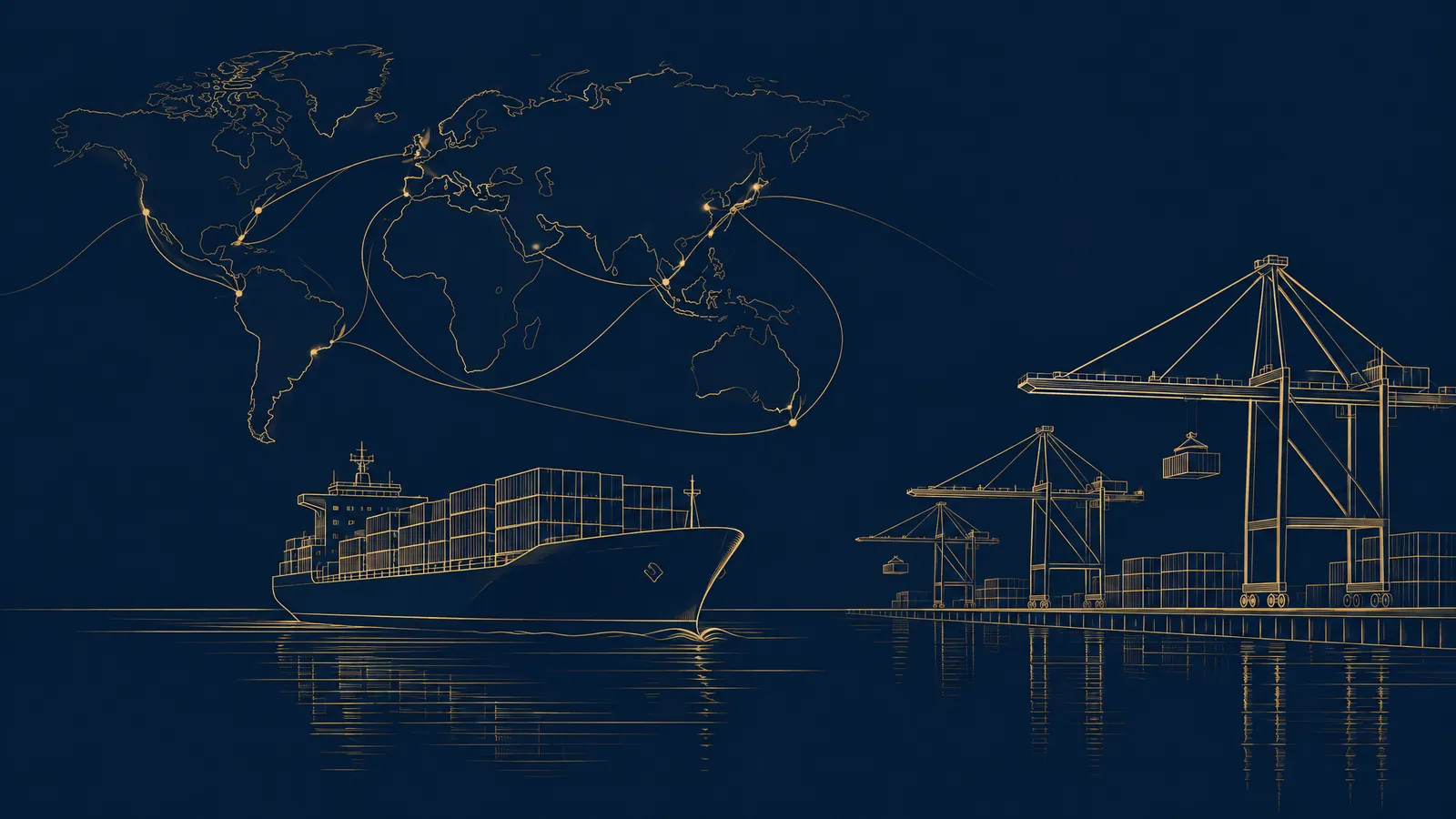
Trade Finance Strategy
Trade finance is short-term lending tied to one cargo: the lender pays the supplier or advances against the invoice, and the buyer's payment repays it. Because every loan is self-liquidating and short, a trade finance portfolio renews itself several times a year, which is why credit funds use it for steady, low-duration income.
The strategy
Many small, short loans, each repaid by a named buyer.
The fund lends to registered trading companies against specific shipments: before loading, while the goods travel, or until a bank pays under a letter of credit. Each loan is sized at 80% to 90% of the purchase price or invoice, so the trader keeps money in the deal.
Repayment comes from the buyer, who pays into a collection account the fund controls. The buyer confirms the order directly, an independent inspector checks the goods before money moves, and cargo insurance names the fund.
With an average asset term of 60 to 120 days, capital turns over three to five times a year. The portfolio is spread across 40 to 80 shipments, with limits per buyer, trader and country, so one problem cannot dominate the result.
The desk that sources the loans prices them from 1.0% per 30 days plus an arrangement fee. After expected losses, costs and fees, that pricing supports the 9% to 11% net target.
What the portfolio finances
Food and agriculture
Rice, grains, coffee, cocoa, edible oils: high-volume goods with clear specifications and steady demand.
Refined metals
Aluminium, copper and steel products bought and sold against exchange-referenced prices.
Manufactured goods
Components, textiles and consumer goods with repeat buyers.
Letter of credit bridges
Short loans repaid by a bank under a confirmed letter of credit.
How one loan works
The life of a shipment loan.
1Before loading
An independent inspector checks the goods. The fund pays the trader's supplier its share of the price; the trader pays the rest.
2In transit
The goods ship under documents the fund controls, insured in its favour.
3On the due date
The buyer pays into a collection account named in the sales contract.
4Settlement
The fund takes the amount it advanced plus the agreed cost. The rest goes to the trader the same day.
Where the return comes from
How the target is built.
| Yield on shipment loans: from 1.0% per 30 days, plus arrangement fees | +13% to +18% a year |
|---|---|
| Expected credit losses: late payment, disputes, defaults | −1.5% to −3% |
| Cash waiting to be deployed, and running costs | −1% to −2% |
| Management and performance fees | −1.5% to −2.5% |
| Target net return to investors | 9% to 11% a year |
Security
Five layers between your capital and a loss.
- 01
Buyer pays the fund
Repayment goes into a collection account the fund controls, named in the sales contract and confirmed by the buyer.
- 02
Goods checked at source
An independent inspector confirms quality and quantity before money moves; the report goes to the fund, not the trader.
- 03
Trader's own money
The fund advances 80% to 90%, so the trader carries the first part of any loss on its own deal.
- 04
Insurance
Cargo insurance names the fund; trade credit insurance covers eligible buyers where it is available.
- 05
Diversification
40 to 80 shipments at a time, with limits per buyer, trader and country.
Portfolio rules
- No more than 10% of the fund with one buyer
- No more than 15% with one trader
- No more than 25% in one country
- No unrefined precious metals, no deals backed only by a letter of intent
- No goods or routes under sanctions; every party screened
Key terms
The terms in one table.
- Target net return
- 9% to 11% a year in US dollars, after feesA target, not a guarantee.
- What it holds
- 40 to 80 shipment loans and receivables at a time: food and agriculture, refined metals, manufactured goods
- Average asset term
- 60 to 120 days; capital turns over three to five times a year
- Concentration limits
- No more than 10% per buyer, 15% per trader and 25% per country
- Protection
- Buyer payments into controlled accounts, independent inspection, documents from their issuers, trade credit insurance where available
- Distributions
- Quarterly, in US dollars
- Liquidity
- Quarterly redemption with 60 days' notice after a six-month lock-up; gates can apply
- Fees
- Management fee 1.5% a year; performance fee 10% of returns above an 8% hurdle
- Vehicle
- Fund units or notes recorded on a permissioned tokenized register
- Minimum investment
- $100,000
- Reporting
- Monthly: positions, days past due, collections, exposures by buyer and country
- Who can invest
- Professional or accredited investors, family offices, funds, platforms for eligible clients
Targets are not guaranteed and are not a forecast. Capital is at risk. Each strategy is offered only through its fund or SPV documents, to eligible professional or accredited investors, where the law allows. Nothing here is an offer, investment advice or a recommendation.
Reviewed . Indicative terms; the fund or SPV documents prevail.
Risks
What can go wrong.
- A buyer can pay late or not at all, or dispute the quality of the goods.
- Documents can be forged; checks reduce this risk but cannot remove it.
- Insurance has exclusions, and not every buyer can be insured.
- Concentration: a few large buyers or one trading corridor can affect results.
- Currency: the strategy is in US dollars; investors in other currencies carry exchange risk.
- Liquidity: redemptions can be gated if many investors ask at once.
- Targets are not guaranteed, and past results of any trade finance fund do not predict future ones.
Who it suits
Built for long-term private-market investors.
Private investors
Professional or accredited investors looking for short-dated income in US dollars.
Family offices
A diversifier for the fixed-income sleeve, with quarterly liquidity and monthly reporting.
Funds and platforms
Credit funds, fund-of-funds and wealth platforms placing capital for eligible clients.
On-chain allocators
Protocols and treasuries that want real-economy yield through a permissioned register.
How to invest
From first question to first report.
- 01
Request access
Tell us who you are and which strategy interests you. We reply within one business day.
- 02
Eligibility
We confirm you are a professional or accredited investor where you live. Some countries are excluded.
- 03
Dataroom
Review the strategy memorandum, terms, credit or investment policy and sample reports.
- 04
Subscribe
Through the fund or SPV documents, after the administrator's identity checks. Units are recorded on the register.
- 05
Reporting
Regular reports and distributions, with every document kept in the Dataroom.
Questions
Asked by investors.
What is a trade finance investment?
It is lending against real shipments of goods. The strategy pays a supplier or advances against an invoice and is repaid from the buyer's payment for that cargo, usually within 30 to 120 days. Investors hold units or notes in the vehicle that makes these loans.
Why is trade finance considered relatively stable?
Each loan is short and is repaid by the sale of the goods it finances, so capital turns over several times a year and problems show quickly. Losses still happen, mostly from disputes, fraud and late payment, which is why buyer confirmation, inspection and concentration limits matter more than the headline rate.
What return does the strategy target?
9% to 11% a year in US dollars after fees, distributed quarterly. This is a target from the strategy's design, not a guarantee or a forecast.
How liquid is it?
Quarterly redemption with 60 days' notice after a six-month lock-up, subject to gates if many investors ask at once. The assets are short-dated, so redemptions are normally met from repayments.
What is the minimum investment?
$100,000. The strategy is open only to professional or accredited investors where the law allows.
How is fraud prevented?
Documents are accepted only from the parties that issue them: the buyer confirms the order and the payment account directly, the inspector reports straight to the fund, and the bill of lading is checked against the carrier. Each invoice is checked so it is not financed twice.
Can on-chain allocators or platforms invest?
Units or notes are recorded on a permissioned tokenized register, so they can be held in whitelisted wallets or by a platform for eligible clients where the fund documents allow.
Where do the shipment loans come from?
From trading companies that apply through the Asset Haus trade finance desk, and from partner originators. Every application passes the same first check before the fund's credit review.
Other strategies
Compare with the other two.
Loans secured by tokenized assets
Collateral Lending Strategy
Senior secured loans with collateral worth at least twice the loan.
- Target net return
- 9–12% a year
- Loan-to-value
- 50% max, 35% average
- Loan term
- 6–24 months
- Minimum
- $100,000
Tokenized pre-IPO
Pre-IPO Strategy
Late-stage private companies through one SPV per deal, bought below the last round.
- Target gross multiple
- 2–3x
- Target entry
- 10–30% below last round
- Holding period
- 3–5 years
- Minimum
- $50,000 per deal
Read next
Read next
- Trade finance for tradersWhere the shipment loans come from: the desk and its terms.
- Tokenized trade finance, explainedHow notes, servicers and registers fit together.
- Invoice and trade finance tokenization guideStructures, servicing and investor reporting.
- All investor strategiesTrade finance, collateral lending and pre-IPO compared.
Targets are not guaranteed and are not a forecast. Capital is at risk. Each strategy is offered only through its fund or SPV documents, to eligible professional or accredited investors, where the law allows. Nothing here is an offer, investment advice or a recommendation.
Asset Haus provides the platform, the tokenized register and the Dataroom. Each strategy is managed by the fund manager named in its documents, which is responsible for investment decisions.